Proud Official Sponsor


Clouds End Training
Courses & Training
CPD Accredited
Safeguarding and Self-Neglect
Understand the impact of the nervous system and executive dysfunction on behaviour, and how to manage complex safeguarding situations.

Course Summary
Two–Day Professional Development Training
Includes an accompanying professional practice book.
Professionals working in safeguarding, education, health and social care frequently encounter people described as chaotic, difficult to engage, or challenging. What if those responses were not simply behavioural issues, but nervous system survival responses?
When behaviour is understood through the lens of the nervous system, safeguarding responses can move from reactive to relational, from control to regulation, and from crisis to connection.
This training provides both the scientific understanding and practical strategies needed to support safer, calmer, and more effective responses in complex safeguarding situations.
Clouds End Supportive Intervention TM
Developed using our own evidence-based, person-centred methods, each course offers practical strategies that are easy to implement into everyday practice.
CPD Accredited
Providing industry-recognised training for mental health professionals and organisations.Supported Over 1,000 Individuals
Through our tailored one-to-one sessions, support groups, and community-focused initiatives.Serving the UK
Based in Solihull, we deliver our services nationwide, reaching individuals, families, and agencies with practical solutions.Upcoming Training Dates
No Event Found
What will you learn?
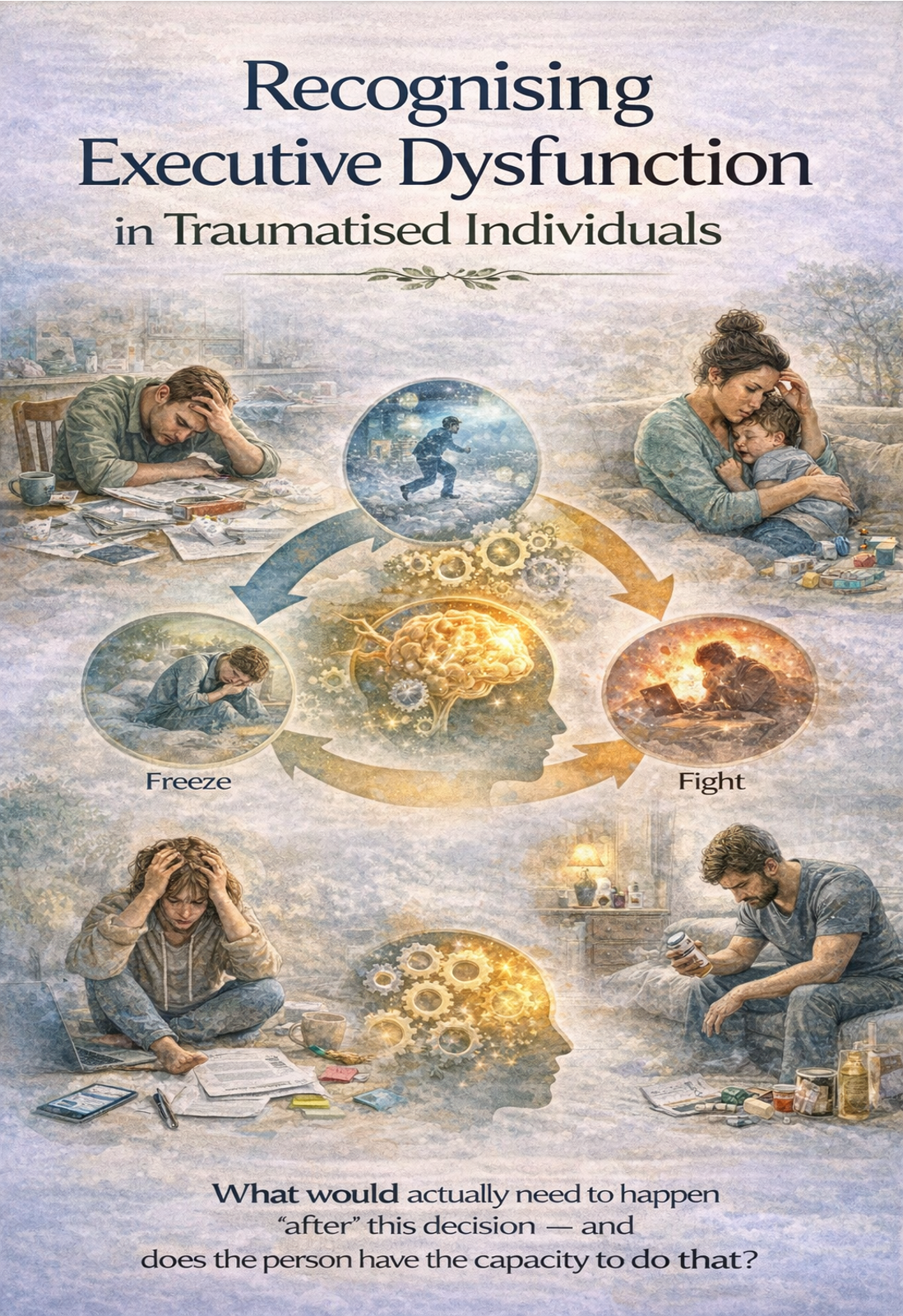
This two–day training introduces participants to a trauma informed framework that combines Polyvagal theory, executive function understanding and safeguarding practice. It provides a clear and practical evidence of how trauma impacts the brain, behaviour, regulation and decision-making.
Key Questions Explored:
- Why do some people move rapidly into fight, flight, freeze or shutdown responses? How can we recognise and respond to these responses?
- How does trauma affect the brain’s ability to regulate emotion and behaviour? What do we need to do to help a person to engage with other people?
- What is executive dysfunction, and how does it affect daily living tasks, thinking, planning and impulse control?
- Why do some safeguarding interventions unintentionally increase distress or escalation? How do we prevent this?
- How can professionals respond in ways that restore safety and regulation?
Day One: Understanding the Nervous System
Participants will explore:
-
The Polyvagal System and its role in safety and threat detection
-
The neurobiology of fight, flight, freeze and shutdown
-
Recognising nervous system states in real practice situations
-
How trauma shapes behaviour, relationships and communication
-
How executive dysfunction affects a persons ability to apply tasks of daily living
-
The role of co-regulation and relational safety
Day Two: Applying Trauma Informed Responses
Participants will explore:
-
Executive Dysfunction and its impact on behaviour and decision-making
-
How trauma affects thinking, planning and impulse control
-
Communication approaches that reduce escalation and build trust
-
Assessing executive dysfunction
-
Needs assessment when someone has executive dysfunction
-
Assessing mental capacity (Issue specific) when someone can talk the talk but not walk the walk
-
Safeguarding agenda and responses
-
Strategies that support regulation, safety and engagement
Free Professional Practice Book Included
This resource supports continued learning and reflection and includes:
• Accessible explanations of Polyvagal theory
• Understanding executive function and trauma
• Practice frameworks for trauma informed safeguarding
• Reflection tools and real-world applications
• Understanding executive function and trauma
• Practice frameworks for trauma informed safeguarding
• Reflection tools and real-world applications
Stay Curious, Stay Informed, Keep Learning
Supporting clients takes ongoing learning, empathy, and real-world experience, attending this course is just the start. We encourage practitioners to stay curious, stay engaged, and keep building confidence in supporting those affected by hoarding.

FAQ'S
Training provided by Clouds End Training Ltd